

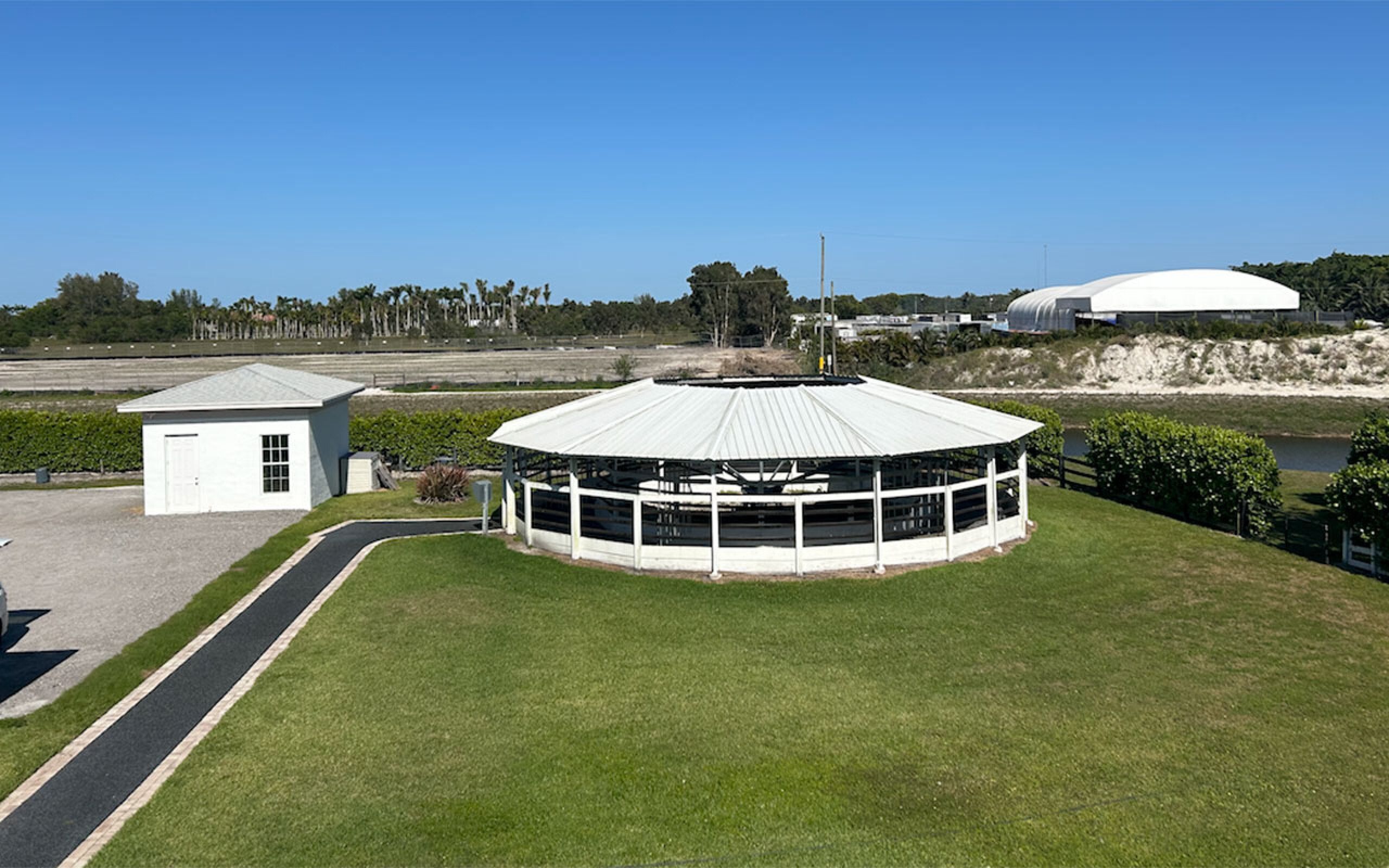
WELLINGTON, Fla. — A legal dispute between two neighboring property owners in Wellington’s Palm Beach Point equestrian community has raised questions about zoning compliance, environmental permits, and the limits of agricultural classification in a residential area.
Aurora Rangel de Alba, owner of an equestrian ranch in the community, filed a civil lawsuit in April 2023 against Matthew Bellissimo and his father, Mark Bellissimo, owners of Agricultural Blending Company — a horse manure processing operation located on the property adjacent to her ranch. Rangel de Alba is asking the court to permanently close the facility. She is not seeking financial damages.
The case remains active in Palm Beach County Circuit Court.
A Decline in Business and Reported Health Symptoms
According to court testimony, stable rental income at Rangel de Alba’s ranch fell from $32,000 per month in 2021 to $5,000 in 2023. Her property manager, Arturo Lagunes Galindo, attributed the decline to odors and dust from the neighboring facility, which he said discouraged prospective clients from boarding horses at the property.
Rangel de Alba has also stated that conditions at her ranch led her to relocate her own horses to an off-site boarding facility, at a reported monthly cost of more than $20,000.
Her physician, Dr. Claudia Porrata, testified that her patient reported symptoms including postnasal drip, eye and nasal irritation, headaches, and chronic cough beginning around the time the facility started operations in 2020. The doctor’s testimony linked the onset of symptoms to the facility’s activity, though the case has not yet reached a final ruling.
The Facility’s Defense
Matthew Bellissimo has testified that Agricultural Blending Company processes horse manure into soil amendment products and operates in full compliance with applicable state permits. He states that the company has invested approximately $500,000 in odor control infrastructure, including misters and sprinklers, in response to neighbor complaints.
Bellissimo has argued that a certain level of manure odor is an expected characteristic of life in an equestrian community, and that his facility addresses a practical regional need by managing the large volumes of horse waste generated in the Wellington area each year.
State inspection results have been mixed. At least one Florida Department of Environmental Protection inspection concluded that detectable odors at the site did not meet the threshold defined as “objectionable” under state regulations.
Questions About Permitting and Classification

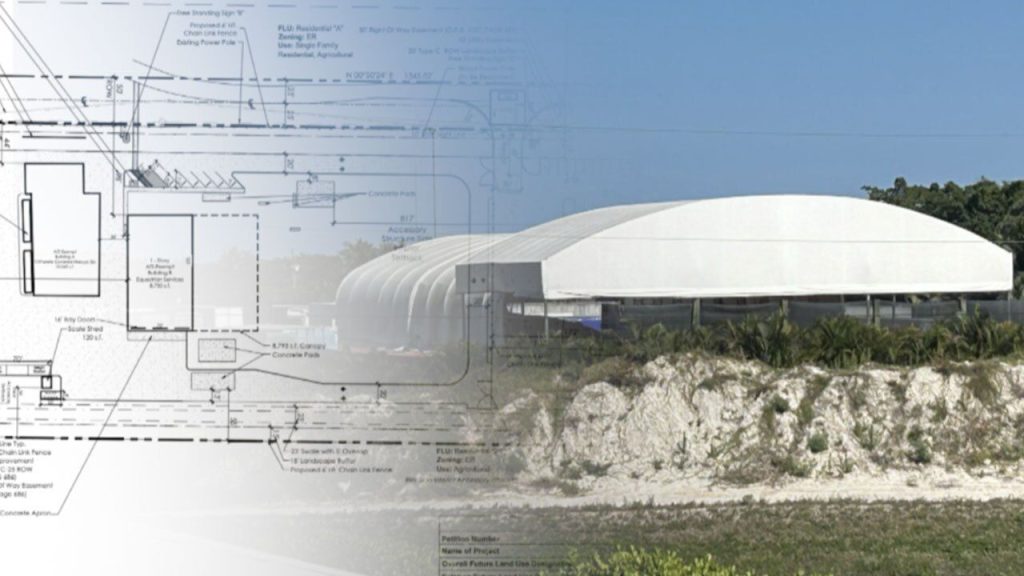
A parallel line of scrutiny concerns how the facility was originally permitted. Investigative reporting by local media, citing internal records, indicated that Village of Wellington staff played a role in developing the business concept for Agricultural Blending Company and in securing an “agricultural” classification for the operation — a designation that allowed it to proceed without a formal public zoning review.
Wellington’s own planning documents have acknowledged that the Equestrian Overlay Zoning District does not ordinarily permit a manure transfer station. The Village of Wellington has not issued a formal public response to the reporting on staff involvement.
Adding to the complexity, different regulatory agencies have described the facility in different terms. The FDEP referred to it as a “Yard Trash Transfer Station” in a 2024 inspection report, while Palm Beach County Fire Rescue listed it as a “manure/shavings transfer” site in 2025 — neither of which matches the agricultural classification currently applied to the operation. An FDEP spokesperson noted that the agency does not itself determine agricultural status.
Rangel de Alba’s legal team has filed a formal complaint with FDEP challenging the facility’s permits. The South Florida Water Management District has separately opened an investigation into whether wetlands on the property were altered without proper environmental authorization.
The Palm Beach Point Property Owners Association sent a letter to the Village Council expressing concern that the facility may be incompatible with the area’s equestrian residential zoning and could affect local air quality and property values.
Broader Industry Attention
The case has drawn attention from others in the industry. Five competing manure hauling companies have filed formal complaints alleging that local regulatory decisions have placed Agricultural Blending Company at a competitive advantage over their own operations. Neighboring residents have also raised concerns about reported expansion plans for the site.
No ruling has been issued. Both sides continue to present their cases before the Palm Beach County Circuit Court. Click here for further information on the case background and media coverage.
As the proceedings continue, the outcome is expected to have implications not only for the two parties involved, but potentially for how similar operations are classified and regulated in Florida’s equestrian communities.